Come for the Vibes, Stay for the Culture
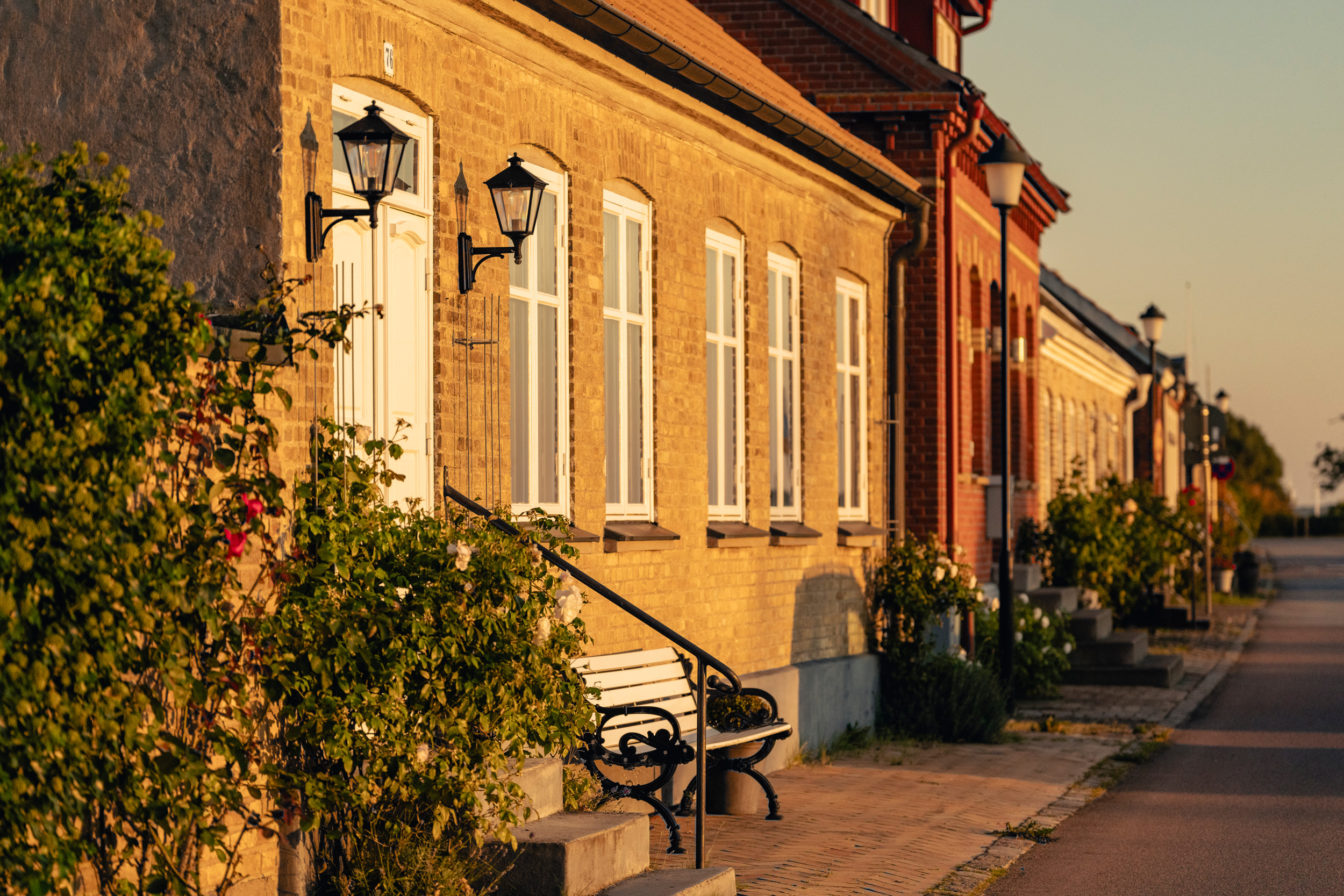
Landskrona is home to a whole host of picturesque locations, like the steep cliffs of Ven or the rolling fields of Glumslöv. One of these offers a tantalizing glimpse into the past along with modern comfort and relaxation: Borstahusen. This former fishing village has much to offer – from quaint, traditional buildings to the cultural powerhouse Pumphuset.
Entering Borstahusen is like stepping into a different time and place. You’ll immediately find your pulse slowing and your shoulders dropping. That’s your body’s way of telling you what the people living here have known for decades: this is a place where you can slow down and take it easy.
Shaped by History
It hasn’t always been that way. Walking down the picturesque streets, you’ll see evidence of the village’s past, when hardworking men and women brought sustenance from the sea through blood, sweat and tears. Borstahusen was founded in 1776 as a fishing village, and for a long time it was a place of toil and trouble. However, like many of Sweden’s fishing villages, its placement by the coast eventually saw it transformed into a place of rest and recreation.
You can learn more about the history of Borstahusen, and how it was gradually transformed into its current form, at Borstahusen Museum. This is one of several reasons to visit the culture house Pumphuset. Most people come to Borstahusen to enjoy a pleasant day by the beach, perhaps accompanied by a walk through the village’s winding streets. Pumphuset is a reason in and of itself to extend your stay.
Pumphuset – Home of Tapas, Art, and History
No visit to Borstahusen is complete without a trip to Pumphuset. Located in the heart of Borstahusen’s marina, this beautiful building can provide both cultural and gastronomic experiences to elevate your visit.
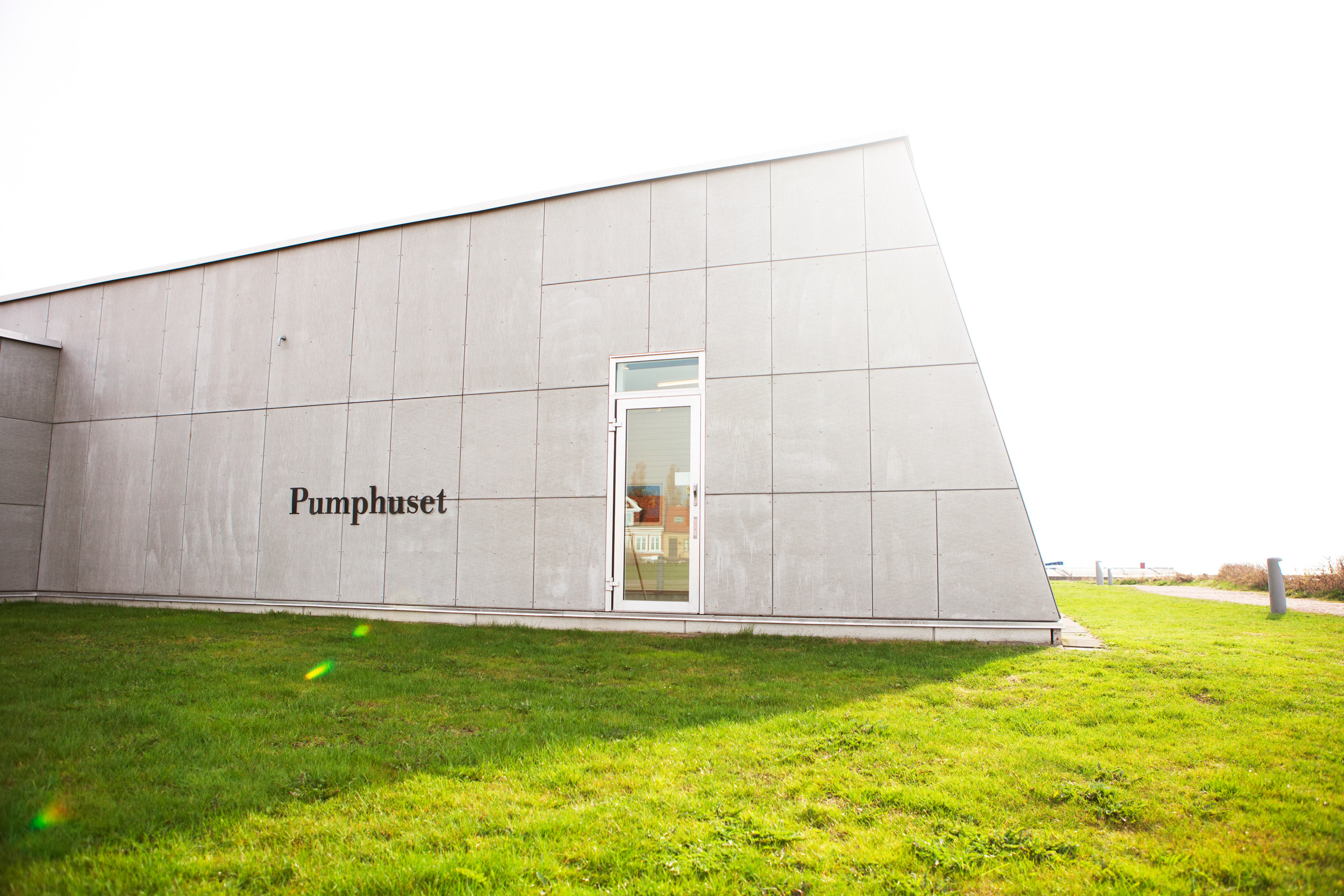
In the historic fishing village of Borstahusen, old meets new. Nowhere is this more evident than at Pumphuset, which combines classical neo-Renaissance with modern architecture in its facade. The building houses three activities, each worth a visit in and of themselves: a restaurant, an art gallery, and a museum.
So why is it called Pumphuset (“the Pump House”)? Originally, Pumphuset got its name because it housed a motor-driven pump that pumped seawater to the Säbyholm sugar factory so that the sugar beets processed there could be washed. The original brick pump house is still standing.
A Unique Art Gallery
Borstahusen’s Art Association runs the art gallery in Pumphuset. With six exhibitions a year featuring some of Scandinavia’s leading contemporary artists, it’s no wonder that the gallery has been named one of Sweden’s finest.
“We’ve managed to establish ourselves as a bit of an institution and have a great relationship with other galleries. The gallery’s constantly evolving; we want to be able to show the full spectrum of art and even though it is Pumphuset as a whole that attracts visitors, we want to offer something very special with our exhibitions,” says Lennarth Cronsell, chairman of Borstahusen’s Art Association.
It was the banker Sture Andersson who once planted the seed for what is today a popular destination for art enthusiasts. He started Borstahusen’s Art Association in 1966 with the explicit goal of showing high-quality exhibitions in Landskrona. The association’s first exhibition featured none other than Marc Chagall as the main attraction. Forty years later, Pumphuset Art Gallery opened.
“It’s a shame that Sture didn’t get to experience when the association came home to Borstahusen. But we’ve strived to keep his vision alive. Even today, we set high standards for the exhibitions and are committed to showing both local and international artists that hold a really high standard,” says Lennarth.
The art gallery consists of two raw-planked walls providing about 50 metres of hanging space. A relatively small gallery, in other words, but the hall forms a tunnel down to a large glass wall that allows visitors to look out over the sea that lies just beyond. This creates a cultural experience that is both intimate and powerful.
Bringing History to Life at Pumphuset’s Museum
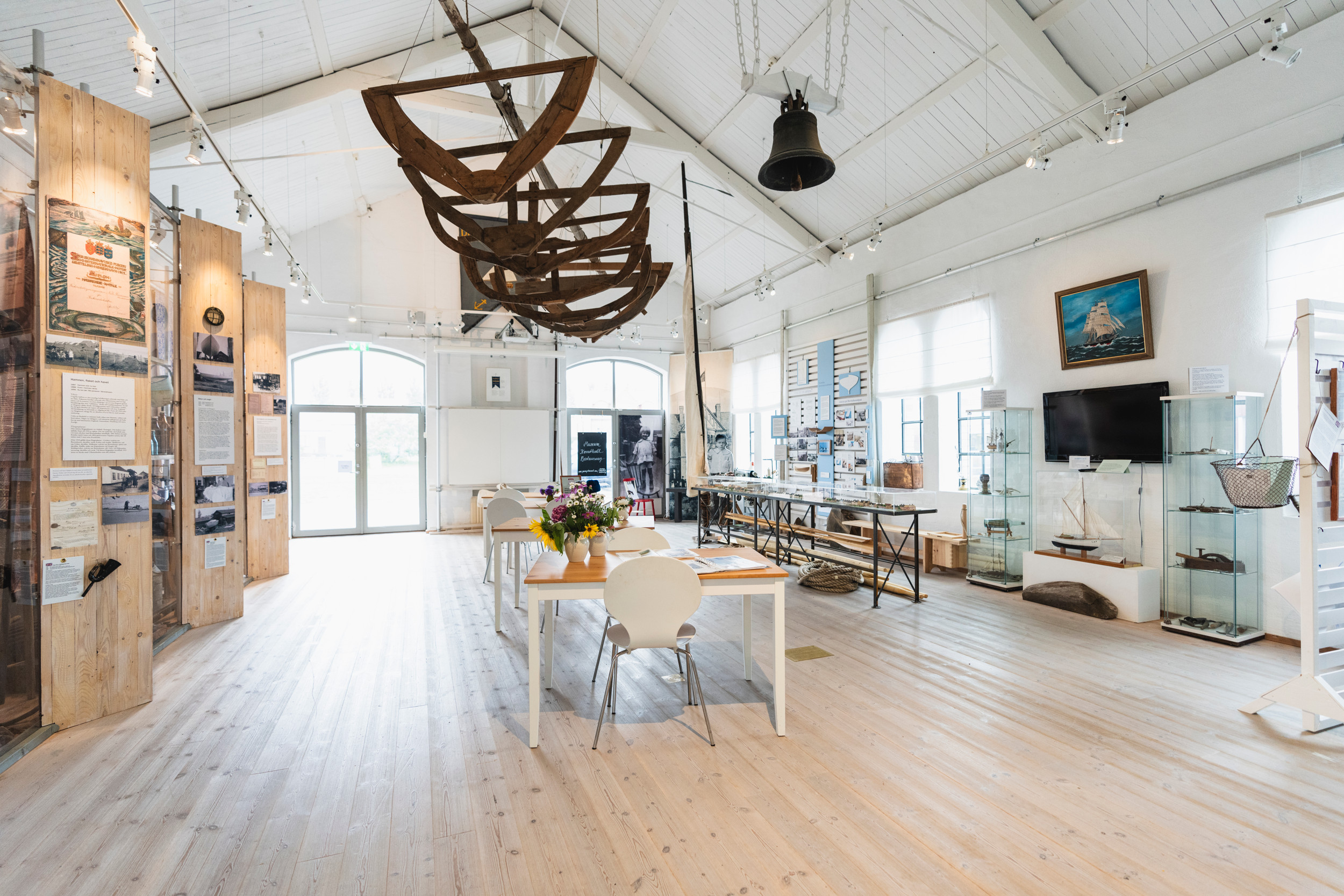
Borstahusen’s museum has its home in the historical brick pump house. Here you can explore Borstahusen’s history, which often has a close connection to the sea and the coast.
“Coastal culture and fishing, that’s what characterizes the history here. I get happy every time I see a fishing boat in the harbour, or someone bringing in nets and fish,” says Inger Torebo, chairman of Borstahusen’s Museum Association.
At the museum you can learn about, among other things, “the Count of Borstahusen” Sture Andersson, and Borstahusen’s building history. But above all, you can learn what it was really like to live here when the place was still an active fishing village. At Pumphuset’s museum, they strive to keep the fishing village’s history alive. From this ambition, projects like Borstahussnipan are born.
“There were three shipyards here once upon a time, and we know that there was a fisherman who built his own snipa (a type of boat) up in his loft. Then we thought: if he could, so can we.”
Said and done. The museum association built their own wooden snipa using traditional materials. Eventually, visitors will be able to go out to sea with the boat. Already, they can try tying knots or making their own fishing nets.
Good Food in a Relaxing Environment
Pumphuset has its own restaurant, Bodega Pumphuset, which offers beautiful views and food focused on ingredients from southern Europe. The core idea is that the food should be uncomplicated but with a strong focus on craftsmanship. The menu is inspired by Spanish cuisine.
The restaurant’s vision was to create a meeting place for everyone, both families and locals as well as companies and tourists. Love for food and drink is reflected in the entire operation, with intimate and friendly service.
“You should feel welcomed, that you’re warmly received, when you come here. We want you to feel that this is a place where you can just slip in and sit down somewhere. And you should immediately understand that the people who work here are passionate about what they do,” says Dion Liljegren, who runs the restaurant together with his restaurateur colleagues Ludvig and Emilia Odeholm.
In recent years, Landskrona has gone through something of a restaurant renaissance. Here, Bodega Pumphuset fills an important niche. The restaurant offers fantastic views over the water at Borstahusen’s harbour, both from inside the building and from the generous outdoor seating area.
According to Dion, there is only one thing you need to think about before your visit.
“You really don’t need to take your car here: take the bus, walk, or cycle, preferably along the beautiful coast.” ‘
FACTS/ Pumphuset’s History
The building was erected in 1900 by Skånska Sockerfabriks Aktiebolaget based on drawings by architect H. Sjöström from Lund. A steam chimney, named Boman after its designer, was also built for the building.
Pumphuset’s significance decreased after the sugar factory closed in the early 1960s. But the residents of Borstahusen decided to renovate it. The choice then fell on creating a cultural house with something for everyone, but the name remained.
For more information, visit pumphuset.nu